Full-Arch Dental Implant Services
Rochester, NY dental implant specialists, like prosthodontists and dentists who focus on dental implant services, provide a variety of comprehensive care ranging from replacing a single missing tooth to full-arch dental implant solutions. This article focuses on one type of dental implant procedure that seems to be particularly confusing because of the many terms and names used to describe it — Full-Arch Dental Implants.
What are Full-Arch Dental Implants?
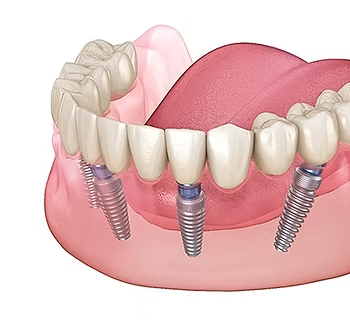
Full-arch dental implants are a permanent, fixed solution to replacing an entire row of upper or lower teeth. They provide superior stability over traditional dentures and eliminate the need for removal to clean them and adhesives to keep them in place.
Patients looking for a full arch of permanent dental implants often become confused when searching online. If this describes your experience, you're not alone. Below are some common terms that relate to full-arch dental implants. Some terms refer to the same thing but are called something different depending on the implant specialist or location. Some terms are similar in nature but differ in subtle ways, and some have registered trademarks because of unique variations of the methods used.
1. Terms that are Interchangeable with Full-Arch Implants
Fixed Dentures
This is another term for full-arch dental implants, which permanently replace a full upper or lower arch of teeth with a fixed, implant-supported prosthesis instead of removable dentures.
Full-Arch Restoration
This term has the same functional goal as full-arch dental implants — to permanently replace an entire upper or lower row of teeth using a fixed, implant-supported prosthesis rather than traditional removable dentures.
Full-Mouth Dental Implants
This term is essentially the same as full-arch dental implants and may be used to describe getting implants on both upper and lower arches. Similar names include full-arch restoration and permanent dentures.
Fixed Hybrid Denture
This is a general term for any non-removable, implant-supported prosthesis that is typically screwed into dental implants.
Dental Implant Fixed Arch Bridge
This term is another way of describing full-arch or full-mouth dental implants. It describes replacing a full arch or full set of teeth with a non-removable, screw-retained prosthesis.
2. Implant-Supported Dentures (Overdentures) – Not the Same as Full-Arch Implants
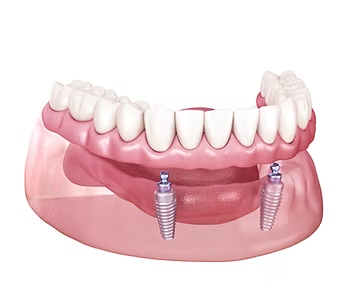
Implant-supported dentures differ from full-arch dental implants because they are removable and designed to snap securely onto implants for easy removal by the patient. Implant dentures and implant-retained dentures are other terms used, while "overdentures" is more commonly used in the professional implant industry. This type uses 4–8 dental implants to secure it to the jawbone. Unlike traditional removable dentures that rely on adhesive, the implants provide a much more stable and permanent solution for patients missing most or all of their teeth.
To make matters even more confusing, these are not the only terms used for implant-supported dentures. Add to the list: fixed dentures, permanent dentures, snap-in dentures, snap-on dentures, or click-in dentures.
3. Similar Models are Branded and Specialized
There are several proprietary types of dental implant methods available that offer a similar model to standard full-arch dental implants, but they are branded and trademarked. This is because they use specific, proprietary methods and/or systems to provide fixed, full-arch dental implant solutions.
Conclusion
If you would like to learn more about the benefits of dental implants or understand the dental implant process, please visit our dental implants page, or call (585) 522-1922 to make an appointment for a consultation with Dr. Kuyunov.